One Case or Piece by Piece? Leathercraft Kit vs Separate Tools
Opening a case with everything in its place is a pleasure; choosing each tool yourself is another. A leathercraft kit or separate tools, compared honestly.
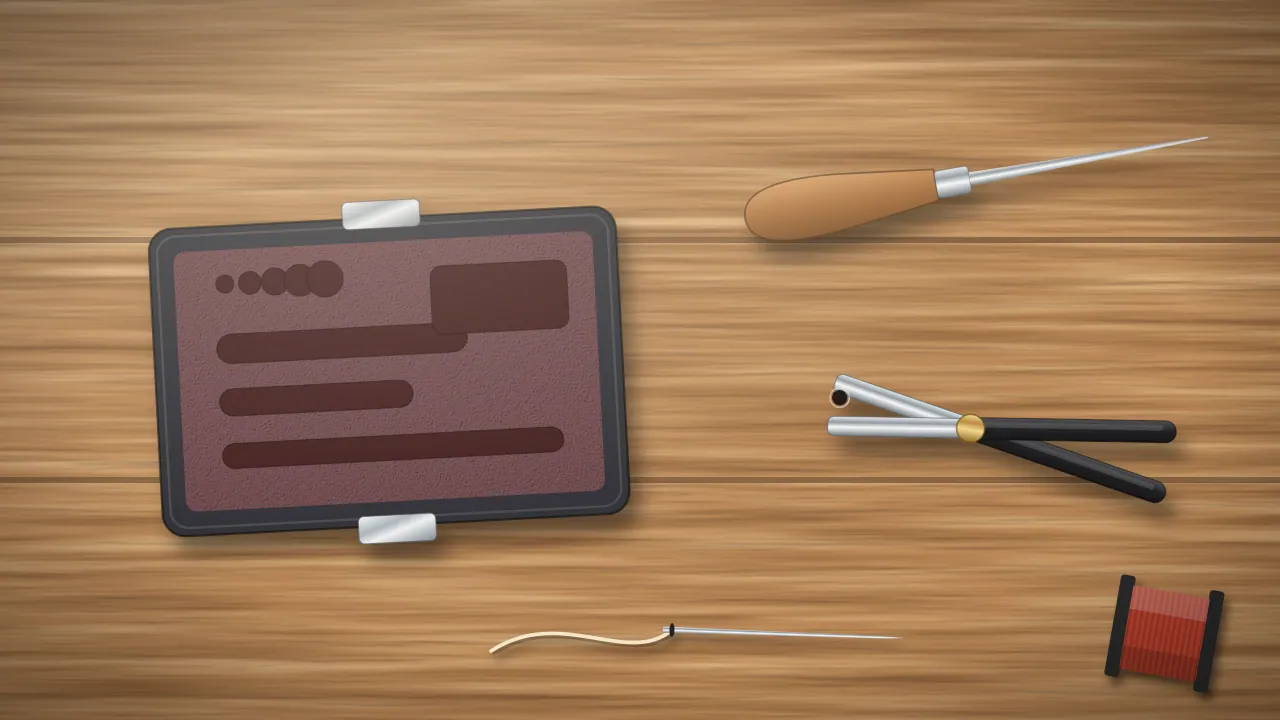
There are two pleasant ways to begin leathercraft. One is opening a case and finding a tool for every stage already in its place, ready for the first evening. The other is choosing each tool yourself, one by one, reading about each and building a toolbox that feels entirely your own. Both lead to finished pieces, and many makers end up combining them. The question is less which one is right than which one suits the way you like to start.
This article compares a leathercraft kit with buying tools separately, honestly, including what kits usually leave out and how to read a contents list. It belongs to our guide on how to start leathercraft, and it pairs well with which leathercraft tools you need, which lists the essentials stage by stage.
What a kit gives you
The main gift of a kit is that you can start straight away. Instead of researching a dozen tools, comparing them and placing several orders, you receive one tool for each stage of a project in a single delivery. For many people, that removes the biggest obstacle to beginning: not knowing where to start. You open the case, lay out the tools, and you can try a first piece the same week.
A kit also keeps things together. Small tools, needles, spools and punch tips are easy to lose on a kitchen table; a case with its own compartments brings them back to one place at the end of each session, and makes it easy to put the craft away and take it out again. If you work in a shared space or move between rooms, that matters more than it might seem.
Finally, a kit is a simple gift. Giving someone the means to try a craft is easier as one box than as a list of separate tools, which is why our article on choosing a leathercraft set as a gift looks at what to check before buying one for someone else.
What choosing tools separately gives you
Buying tools separately lets you choose each one precisely: the knife that suits your hand, the stitch spacing you like, the thread colour you want. You can spend more on the tools that matter most to you and less on the ones you use rarely. You also avoid owning tools you never use, which happens with kits that include large sets of decorative tools when you only wanted to stitch.
It is also a way of learning. Reading about each tool, why it exists and how it is used, gives you a deeper understanding of the craft before you start. Many experienced makers recommend buying a small core of tools, making a first project, and only then adding the next tool when a project asks for it. That approach spreads the cost and grows your toolbox around what you actually enjoy making.
The downsides are time and uncertainty. Researching takes effort, several orders mean several deliveries, and without experience it is hard to know which variant of a tool you need. It is also easy to forget a small but essential item, such as needles of the right type or a cutting mat, and to discover the gap halfway through a first project.
How to read a kit's contents
Kits often advertise a number of pieces, and it is worth looking at what those pieces are. A large count may include a set of stamping tools, several spools of thread or a pack of needles counted individually. That is not misleading in itself, but it means the number of pieces says little about whether every stage is covered. Read the list stage by stage instead: marking, cutting, holes, stitching, edges.
Then look for what is not included. Many kits do not include leather, which you will choose separately. Many include struck tools, such as prong punches and stamping tools, without a mallet to strike them with. Some leave out a cutting mat, a steel ruler or a utility knife, which you will want for straight cuts. None of these gaps is a problem if you know about them; they only cause frustration when you discover them with the leather already marked.
Read any kit this way, stage by stage. A fairly complete set might hold a tape measure and a marking wheel to measure and mark; scissors, a swivel knife and stamping tools to cut and decorate; a press punch, prong punches, a groover and an awl to make holes and prepare the seam; waxed thread, needles and a finger protector to stitch; and burnishers and a slicker for the edges. Then look at what is missing: most kits do not include leather or a mallet for struck tools, and for long straight cuts most people add a utility knife and a steel ruler.
Quality, sharpness and what to replace
Whether in a kit or alone, cutting and punching tools are only useful if they are sharp. When your tools arrive, try each cutting tool on an offcut: a knife should slice without dragging, a punch should cut a clean hole on a firm surface, a pricking iron should leave evenly spaced marks. If a tool is dull, sharpening or stropping often brings it up; if it cannot be sharpened, replace that one tool rather than the whole set.
Keep in mind that hand tools have small tolerances. Punch tips, for instance, can vary by a few tenths of a millimetre from their stated size, which is normal and easy to check with a test hole. Tools that are cleaned, dried and stored after each session stay pleasant to use far longer, as described in cleaning, sharpening and storing leathercraft tools.
A kit does not have to be your final toolbox. Many makers keep the case as their travelling or second set once they have upgraded certain tools, and the case itself remains useful for keeping small items together.
A middle path
In practice, many people combine the two approaches. Some start with a kit, make a few pieces, discover which stages they enjoy, and then upgrade the tools they use most: a better knife, pricking irons in the spacing they like, a stitching pony. Others buy a small core of tools separately, such as a knife, a ruler, a mat and a punch, and add a kit later for the variety of tools it brings.
If noise matters where you work, check how each tool makes holes. Struck tools need a mallet and a hard board, and they are loud; press tools cut quietly. Press punches, with a single tip or interchangeable ones, are quiet, but each has a practical thickness range; check it against the leather you plan to use.
Think too about where the tools will live. A kit's case is a ready-made home for small items, while separate tools need a box, a roll or a drawer of their own. Either way, a tidy place to put everything back at the end of a session makes it much easier to pick the work up again the next evening, which in the long run matters more than any single tool.
Whichever path you take, budget for leather as well as tools, since it is easy to forget when focusing on equipment. Our article on what it really costs to start leathercraft helps you plan both.
Choosing the start that suits you
A leathercraft kit gets you started quickly, keeps your tools together and makes a simple gift; buying separately lets you choose every tool precisely and grow your toolbox around your projects. Read any kit stage by stage, check what it leaves out, test its cutting tools on arrival, and replace or add tools as your projects ask.
Most importantly, start. The most reliable way to learn which tools you need is to make a first piece with the tools you have, notice which ones you reached for, and let the next project tell you what to add. The first leather projects guide suggests pieces that make that first evening worthwhile. Our own starter kit lists every piece on its page, so you can read it this way before deciding.
Questions people ask
Is a leathercraft kit worth buying?
It can be, if it covers each stage of a project and its cutting tools are sharp. A kit lets you start quickly and keeps tools together. Read the contents stage by stage and check what is missing, such as leather, a mallet, a cutting mat or a straight-edge knife, before buying.
What is usually missing from a leathercraft kit?
Leather is very often not included. Kits with prong punches or stamping tools often leave out the mallet needed to strike them. Some also lack a cutting mat, a steel ruler or a utility knife for straight cuts. These are inexpensive to add once you know about them.
Should I buy a kit or tools one at a time?
Both work. A kit is quicker and simpler to start with; separate tools let you choose each one precisely and spend where it matters to you. Many makers start with one approach and later combine them, upgrading the tools they use most.
How many tools do I need to start leathercraft?
Fewer than most kits contain. A knife, a ruler and a mat to cut, something to mark lines, a way to make holes, needles, waxed thread and scissors to stitch, and sandpaper with a slicker for edges cover a first small project.
Do leathercraft kits include leather?
Most do not. Tool kits usually bring the tools for each stage, and leather is chosen separately, as is a mallet for any struck tools. Offcuts or a small panel of vegetable-tanned leather are enough for first pieces.