Two Ways to Make Leather: Vegetable-Tanned vs Chrome-Tanned
One leather darkens and polishes with every year, the other stays soft and even. Vegetable-tanned vs chrome-tanned leather, and which suits what you make.
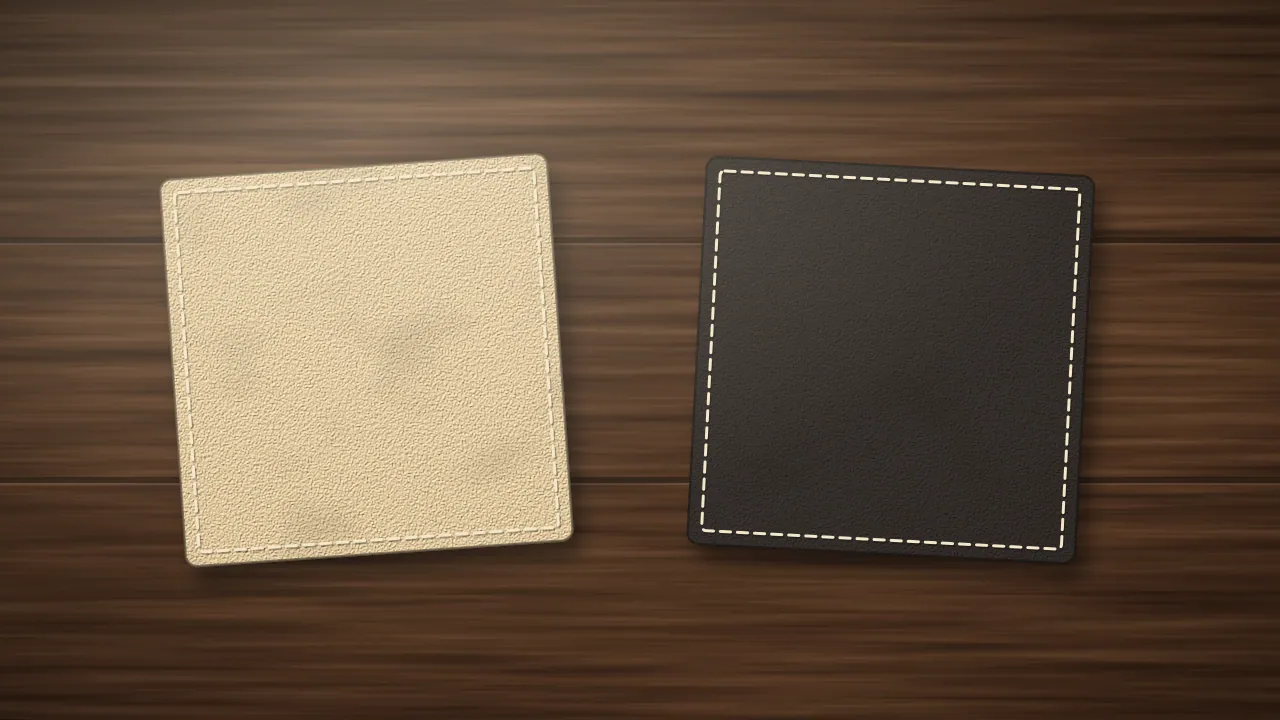
Pick up a piece of vegetable-tanned leather and a piece of chrome-tanned leather and the difference is obvious before you read any label. The first is firm, almost like thick card, with a warm natural colour and a faint woody smell; press a fingernail into it and the mark stays. The second is soft and supple, often already coloured right through, and it springs back when you squeeze it. Both are real leather, both can be beautiful, but they behave so differently at the bench that choosing between them shapes the whole project.
This article explains what vegetable tanned vs chrome tanned actually means, how each process changes the leather, what each one is good and less good at, and how to tell them apart when a label is missing. It is part of our guide on how to choose leather for your projects, which covers grades, thickness and the parts of a hide as well.
What tanning does
A raw hide is mostly collagen fibres and water. Left as it is, it would stiffen as it dries and rot when it gets wet. Tanning changes the structure of those fibres so the hide becomes a stable material that stays flexible and resists decay. Before tanning, hides are cleaned, the hair is removed, and they are prepared so the tanning agents can penetrate evenly.
The tanning agent is what gives each family of leather its character. Vegetable tanning uses tannins, natural compounds extracted from tree bark, wood, leaves and fruit; chrome tanning uses mineral salts based on chromium. There are other methods too, such as aldehyde tanning, often used for leathers sold as "chrome-free", and combination methods that use one agent and then the other. But vegetable and chrome are the two you will meet most often in a craft supplier's catalogue.
After tanning, leather is usually dyed, fattened with oils to set its softness, dried and finished. These later steps, which tanneries adjust carefully, are why two leathers of the same tannage can still feel very different. Still, tannage sets the basic behaviour, and that is what matters most for the maker.
Vegetable-tanned leather
Vegetable tanning is the older of the two methods and is usually slower, with hides spending a long time in successive baths of tannin. The resulting leather is typically firm, with a dense, slightly dry feel, and it comes in natural tones from pale tan to brown, or dyed. It is the leather most associated with hand-stitched small goods, belts, holsters and anything stamped or carved.
Its qualities at the bench are many. It cuts with a clean edge, holds the shape of stitch holes, and can be burnished to a smooth, polished edge with a slicker and a little water, as described in finishing leather edges and surfaces. When dampened, a process called casing, it takes impressions from stamping and carving tools and can be moulded around a form, then holds that shape as it dries. It also changes with time: light, oils from your hands and use darken it into a patina, explained in patina explained.
It has its limits. Natural vegetable-tanned leather marks easily from water, oils and scratches, at least until it has been finished or has aged. It is generally less resistant to water and heat than chrome-tanned leather, and it can feel stiff at first in pieces that need to drape. Many people consider those marks part of its charm; others prefer a finish that protects it.
Chrome-tanned leather
Chrome tanning is much faster and became widespread in the industrial era; a large share of the leather made today is chrome-tanned. The resulting leather is usually soft, supple and stable in colour, often dyed through its thickness, and it resists water and heat better than natural vegetable-tanned leather. It is the typical leather of shoes, garments, upholstery and soft bags.
For a maker, chrome-tanned leather is pleasant in a finished piece but asks for different techniques. It does not burnish well, so its edges are usually folded, bound or finished with edge paint. It cannot be stamped or carved, because it does not hold an impression. It stretches more, which is lovely in a bag that drapes but less helpful in a strap that must keep its length. And it is harder to cut perfectly straight when you are learning, because it moves under the blade.
Questions about chrome tanning and the environment come up often. Like any tanning process, it produces effluent that tanneries have to treat, and regulation and practice vary from one country to another; vegetable tanning has its own environmental footprint too. In the European Union, leather articles that come into contact with the skin are subject to a limit on hexavalent chromium, a form that can cause allergic reactions. If this matters to you, ask your supplier about the tannery and its certifications rather than relying on the tannage alone.
How to tell them apart
Suppliers usually state the tannage, but offcuts and old pieces often come without a label. A few observations help. Look at a cut edge: vegetable-tanned leather usually shows a firm, uniform brown or tan cross-section, while chrome-tanned leather that has not been dyed right through can show a pale, greyish or bluish core. Bend a corner: firm, slightly crackly resistance suggests vegetable tanning; soft, rubbery give suggests chrome.
A drop of water is another clue. On unfinished vegetable-tanned leather, water usually darkens the surface quickly and soaks in; on chrome-tanned leather, it tends to sit longer before absorbing. Try burnishing a short length of edge with a slicker: vegetable-tanned leather polishes, chrome-tanned leather stays fuzzy. None of these tests is perfect, since finishes and combination tannages blur the picture, but together they usually point the right way.
Some leathers combine both. A chrome-tanned leather retanned with vegetable tannins can feel firmer and take some burnishing; a vegetable-tanned leather with a waxy finish can resist water better than usual. The characterful pull-up and oiled leathers are often in this family, as described in pull-up, oiled and waxed finishes.
Which to choose for what you make
For hand-stitched small goods, belts, watch straps, key fobs and anything you want to stamp, carve or burnish, vegetable-tanned leather is the natural choice, especially while you are learning. It forgives cutting mistakes, shows you clearly where your holes and stitches are, and rewards finishing work. Our article on choosing leather for wallets shows how thickness and tannage combine for one common project.
For soft bags, linings, pouches and garments, chrome-tanned leather is often the better fit, because it drapes, folds and resists marks. Many makers combine the two: a firm vegetable-tanned exterior with a soft chrome-tanned lining. Whatever you choose, check the grade as well as the tannage; full-grain, top-grain and genuine leather explains what those labels mean.
When you combine the two in one piece, plan the seams with both behaviours in mind. A soft lining glued to a firm exterior can wrinkle if the firm layer is bent after gluing, so glue the layers in the shape they will have in use, for example curved over the edge of a table for a wallet that folds. Edges where both leathers meet will not burnish evenly, which is why such pieces are often finished with edge paint, or the soft layer is trimmed slightly back from the edge so only the firm leather shows. A test on offcuts of the two leathers, glued and stitched together, shows how they will behave before you commit to the real piece.
Choosing with your hands
The difference between vegetable tanned vs chrome tanned leather comes down to firmness, finishing and ageing. Vegetable-tanned leather is firm, takes tooling and burnishing, and develops a patina; chrome-tanned leather is soft, stable and resistant, and prefers painted or folded edges. Neither is better in every case; each suits different pieces.
Order a small panel of each and make the same simple piece from both, and you will understand the difference better than from any description. Both cut and punch cleanly with sharp tools; the differences show most in the edges, the stamping and the way each one ages.
Questions people ask
Which is better, vegetable-tanned or chrome-tanned leather?
Neither is better in every case. Vegetable-tanned leather is firm, takes stamping and burnishing and develops a patina, which suits hand-stitched small goods and belts. Chrome-tanned leather is soft, supple and more resistant to water and heat, which suits bags, garments and linings.
Can you burnish chrome-tanned leather?
Generally not well. Its fibres do not compact and polish the way vegetable-tanned fibres do, so the edge tends to stay fuzzy. Chrome-tanned edges are usually finished with edge paint, folded or bound instead. Some combination-tanned leathers burnish partly.
Is vegetable-tanned leather better for the environment?
Not automatically. Both methods have an environmental footprint, and much depends on how a tannery manages water, chemicals and waste. If it matters to you, ask your supplier about the tannery and any certifications rather than relying on the tannage alone.
How can I tell if leather is vegetable-tanned?
Look for a firm, uniform brown or tan cut edge, a stiff feel when bent, and a surface that darkens quickly with a drop of water. Try burnishing a short length of edge: vegetable-tanned leather polishes, chrome-tanned leather usually stays fuzzy. Finishes can blur these signs.
Can I stamp or carve chrome-tanned leather?
No, not in a useful way. Stamping and carving rely on vegetable-tanned leather's ability to take and hold an impression when dampened. Chrome-tanned leather springs back and does not keep the pattern, so tooling is done on vegetable-tanned leather.